

Boba tea. Bubble tea. Whatever you want to call it – it’s that sweet, creamy drink with the chewy tapioca pearls at the bottom. And yeah, it’s kind of addictive.
If you’ve never had it before, the concept might sound weird. Tea with little chewy balls in it? But trust me, once you try it, you get why people are obsessed. There’s something really satisfying about drinking your tea and then getting those soft, slightly sweet pearls through your straw.
The drink started in Taiwan back in the ’80s – someone got creative with their tea and the rest is history. Now you can find boba shops basically everywhere. Every mall has at least one. They’re on every corner in some cities.
Here’s the cool part though. You can totally make this at home. Like, it’s not that hard. And you get to control everything – how sweet it is, what kind of milk you use, fruit flavors, whatever. Plus it’s way cheaper than buying it every time you want one. Those $6-7 drinks add up quick.
Making boba at home is actually pretty fun. Yeah, there’s a few steps involved, but nothing crazy. You cook some tapioca pearls, brew some tea, mix it with milk and sugar, throw in some ice. That’s basically it.
This guide’s gonna walk you through the whole thing. How to cook the pearls so they’re actually chewy and not rocks. How to brew tea that tastes good. How to put it all together. Plus some flavor ideas once you’ve got the basic version down.
Whether you’re making this for a party, just craving it on a random Tuesday, or trying to impress someone, homemade boba is the move. Let’s make it happen.
Why This Bobba Tea Recipe is Perfect for You
Make It However You Want
The whole point of making boba at home is you get to control everything.
Want your tea stronger? Steep it longer. Like it super creamy? Add more milk. Not into super sweet drinks? Use less sugar. It’s your drink, make it work for you.
You can try different teas too. Black tea is the classic choice, but oolong’s good if you want something a little lighter. Green tea works. Jasmine tea is really nice if you like floral flavors. Fruit teas are great for summer. Just experiment and see what you like.
And flavors? Go nuts. Vanilla syrup, caramel, honey, chocolate, whatever sounds good. That’s actually one of the fun parts – trying different combinations to see what works.
Works for Different Diets
Need it vegan? Use plant milk and skip the regular dairy. Oat milk’s probably your best bet texture-wise.
Dairy-free but not vegan? Same deal, just use whatever milk alternative you prefer.
Watching sugar? Cut down on the sweetener or use stevia or monk fruit instead. The pearls themselves are pretty plain so if you go easy on added sugar, you can actually keep it relatively low-sugar.
Not saying it becomes health food or anything, but at least you have options.
Way Cheaper Than Buying It
Real talk – boba shops charge like $5-7 per drink. Sometimes more depending on where you live and what you get.
Making it at home? Maybe $1-2 per serving once you’ve bought the initial ingredients. Tapioca pearls are cheap. Tea is cheap. Milk you probably already have.
The math works out fast. Make it a few times and you’ve already saved money compared to buying it. Make it regularly and you’re saving serious cash.
Plus the ingredients are easy to find. Most grocery stores have tapioca pearls now, or you can order them online. Everything else is standard stuff.
Easy Enough for Beginners
You don’t need special equipment. A pot to boil water, something to brew tea in, a cup. That’s basically it.
The ingredients aren’t weird or hard to find. It’s tea, milk, tapioca pearls, sugar. Nothing exotic.
Even if you’ve never made boba before, this recipe will get you there. Yeah, there’s a learning curve with cooking the pearls just right, but you’ll figure it out after trying it once or twice.
And when you show up with homemade boba? People are impressed. It looks way harder than it actually is.
Good for Busy People
Here’s a tip – prep stuff ahead of time.
Brew your tea in the morning and stick it in the fridge. Cook a batch of boba pearls and save them in simple syrup for a day or two. Then when you want boba, it takes like 2 minutes to assemble. Just grab your tea, add milk and ice, throw in the pearls, done.
Way faster than getting in your car, driving to a boba shop, waiting in line, driving back. You’re looking at what, 5 minutes total? Maybe less if everything’s already prepped.
Makes it actually realistic to have boba regularly instead of it being this whole thing you have to plan for.
Essential Ingredients for Making Bobba Tea
What You Actually Need
Making boba at home doesn’t require a ton of weird ingredients. Here’s what you need.
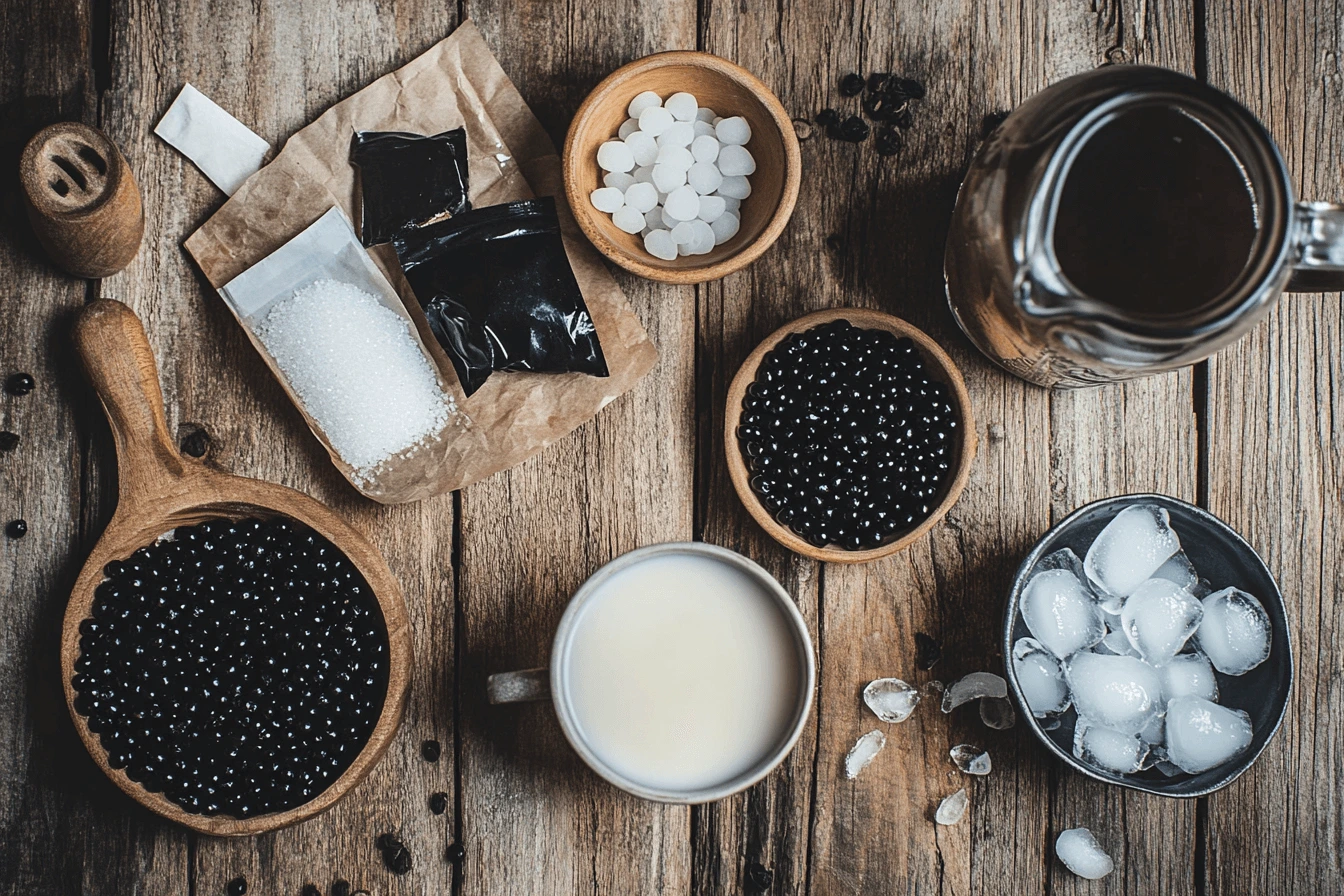
Tapioca Pearls (Boba)
These are the whole point of bubble tea, right? The chewy balls.
They’re made from tapioca starch – basically cassava root that’s been processed into these little spheres. Most people use the black ones, which are about ¼-inch around. That’s the standard size.
You need about ½ cup of dried pearls for this recipe. “Dried” is key – they come dry and hard, then you boil them to make them soft and chewy.
You can find them at Asian grocery stores pretty easily now. If you don’t have one nearby, Amazon has them. Look for brands like WuFuYuan or Boba Tea Direct.
Tea
This is your flavor base. Black tea’s the traditional choice – Assam or Ceylon are good options. Strong black tea gives you that classic milk tea taste.
But honestly? Use whatever tea you like. Green tea works. Jasmine tea is really nice. Oolong’s good. Fruit teas are great for summer. There’s no boba police.
You need 2-3 tea bags, or about 2 tablespoons of loose leaf tea if that’s what you have. Loose leaf usually tastes better but bags are more convenient. Your call.
Milk
This is what makes it creamy instead of just tea with balls in it.
Whole milk is classic. It’s rich and creamy and works really well. But if you’re vegan or dairy-free or just prefer plant milk, go for it. Oat milk’s probably the best plant milk for this – similar texture to real milk. Almond works but it’s thinner. Coconut milk’s good if you like that coconut flavor.
You need 1 cup for this recipe, but honestly you can adjust based on how creamy you want it.
Sweetener
How sweet you make it is totally up to you. Some people like it really sweet, others just want a hint.
Start with 2 tablespoons of sugar and see how that tastes. You can always add more but you can’t take it away.
Regular white sugar works. Honey’s nice if you want something different. Simple syrup (which is just sugar dissolved in water) mixes in easier than granulated sugar, especially in cold drinks.
Agave or maple syrup work too if that’s your thing. Just know they’ll add their own flavor on top of the sweetness.
Water
You need 4 cups total. Some for boiling the pearls, some for brewing the tea.
Use filtered water if you have it. Makes the tea taste cleaner. Tap water’s fine if that’s what you’ve got, but filtered is better.
Ice
About 1 cup of ice cubes to make it cold and refreshing.
Without ice, you’re basically drinking lukewarm milk tea with pearls, which is… not great. The cold is part of the whole experience.
If you’re making this and drinking it right away, you need ice. If you’re prepping ahead, you can skip it until you’re ready to actually drink it.
Substitutes and Variations
Different Teas
Don’t have black tea? No problem. Literally any tea works for this.
Matcha’s great if you want that trendy green tea thing. Just whisk it with a little hot water first so it doesn’t clump up.
Herbal teas can be really nice. Chamomile makes it kind of calming and floral. Hibiscus gives you this tart, fruity vibe and turns it pink, which looks cool.
Fruit teas are perfect for summer. Peach tea, mango tea, passion fruit – all good choices. They bring their own sweetness too so you might not need as much added sugar.
Honestly just grab whatever tea sounds good to you and try it. Worst case, you don’t love it and you try something else next time.
Dairy-Free Options
Already covered this a bit, but yeah – plant milks work fine.
Almond milk is probably the most common swap. It’s thinner than regular milk but it works. Has a slightly nutty taste which some people like.
Soy milk’s good too. Closer to real milk texture-wise.
Coconut milk makes it taste tropical. If you’re into that coconut flavor, go for it. If not, skip it.
Oat milk’s my personal favorite for boba. Creamy, doesn’t have a strong flavor of its own, froths well if you’re into that. It’s gotten really popular for a reason.
Cutting Sugar
Want it less sweet? Just use less sweetener. Start with 1 tablespoon instead of 2 and see how it tastes.
Need it sugar-free for health reasons? Stevia or monk fruit sweetener work. They taste slightly different than sugar but they do the job. Some people notice the difference more than others.
Erythritol’s another option. Tastes closer to real sugar than stevia in my opinion, but it can have a cooling effect in your mouth that’s kind of weird at first.
Just know that the tapioca pearls themselves are basically pure carbs, so even if you skip added sugar, the drink’s not exactly low-carb.
Flavored Syrups
This is where you can get creative.
Caramel syrup makes it taste like a dessert. Vanilla’s subtle but nice. Hazelnut gives you that coffee shop vibe.
Fruit syrups work too – strawberry, mango, lychee. You can add them to the tea or toss the pearls in them for extra flavor.
Some boba shops have like 20 different flavor options. You can do the same thing at home with different syrups. Just don’t go too crazy and add five flavors at once. Keep it simple.
Step-by-Step Instructions for Homemade Bobba Tea
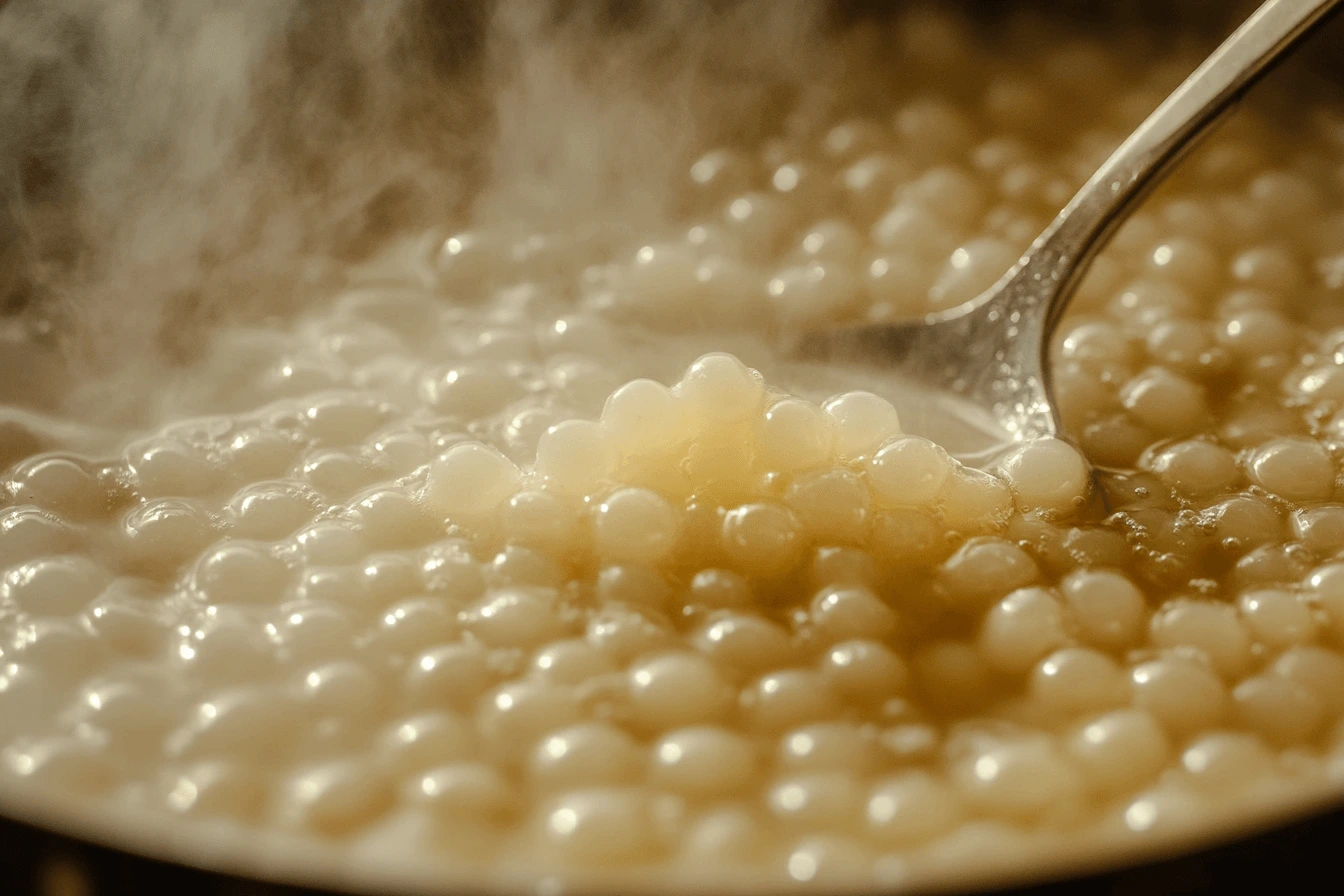
How to Cook Boba Pearls
This is the part where people usually mess up, so pay attention. Getting the pearls right makes or breaks the whole drink.
Get the water boiling
Fill a large pot with 4 cups of water and crank the heat to high. You want a full rolling boil – not just simmering, actually boiling with big bubbles.
Don’t add the pearls until the water’s really going. If you add them too early, they’ll just dissolve into mush. Wait for that hard boil.
Dump in the pearls
Pour your ½ cup of dried tapioca pearls into the boiling water. They’ll sink to the bottom immediately.
Here’s the important part – stir them right away. Like, immediately. Don’t walk away or check your phone. Stir.
If you don’t stir, they stick to the bottom of the pot and to each other, and you end up with one giant pearl blob instead of individual pearls. Not fun to deal with.
Cook them
Let them cook for 15-20 minutes. Keep stirring every minute or two so they don’t stick.
You’ll see them change as they cook. They start out small and hard, then they get bigger and kind of translucent. When they’re done, they should look almost see-through with maybe a tiny white dot in the very center.
Some people like them softer, some like them chewier. If you want them really soft, go for the full 20 minutes. Want more chew? Stop at 15.
Let them rest
Turn off the heat and just let the pearls sit in the hot water for another 5 minutes. Don’t drain them yet.
This resting time is what makes them properly chewy instead of hard in the middle. They keep cooking a little bit from the residual heat, and the texture gets way better.
Sweeten them
Drain all the water out through a strainer. Move quick here – you want to season them while they’re still hot.
Toss them with about 1 tablespoon of sugar or honey. Mix them around so they all get coated.
This does two things. Makes them taste better, obviously. But it also keeps them from sticking together into a solid mass. The sugar coating gives them a slight barrier.
If you’re not using them right away, keep them in that sugar coating at room temp for an hour or two. They won’t last longer than that though. Boba pearls are really best fresh.
Brewing the Tea for Your Boba
Now that you’ve got your pearls sorted, time to make the actual tea part.
Boil your water
Get 2 cups of water boiling. Filtered water makes it taste better if you have it, but tap water works fine too.
Don’t use the same water you cooked the pearls in. That water’s full of starch and will make your tea cloudy and weird. Start fresh.
Steep the tea
Toss 2-3 tea bags into the hot water. If you’re using loose leaf, about 2 tablespoons is good.
Let it steep for 5-7 minutes. This is where you control how strong your tea tastes. Want mild tea flavor? Pull it at 5 minutes. Want it really strong and robust? Go for 7 minutes or even up to 10.
Here’s the thing though – if you steep it too long, it gets bitter. There’s a sweet spot where it’s strong but not harsh. You’ll figure out where that is after making it a few times.
Black tea can handle longer steeping better than green tea. Green tea gets bitter faster, so if you’re using that, stick to like 3-5 minutes max.
Sweeten it
While the tea’s still hot, add your sugar or whatever sweetener you’re using. About 1 tablespoon is a good starting point.
Hot liquid dissolves sugar way better than cold liquid. If you try to add sugar after the tea’s cold, you’ll be sitting there stirring forever and it still won’t all dissolve. Do it now while it’s hot.
Cool it down
This is important. You cannot put hot tea over ice and expect it to work. You’ll just end up with watered-down warm tea.
Let it cool to room temperature. Or stick it in the fridge if you’re in a hurry. Give it like 20-30 minutes to actually get cold.
I usually make my tea in the morning and leave it in the fridge all day if I know I want boba later. Makes the final assembly way faster.
Assembling the Perfect Boba Tea
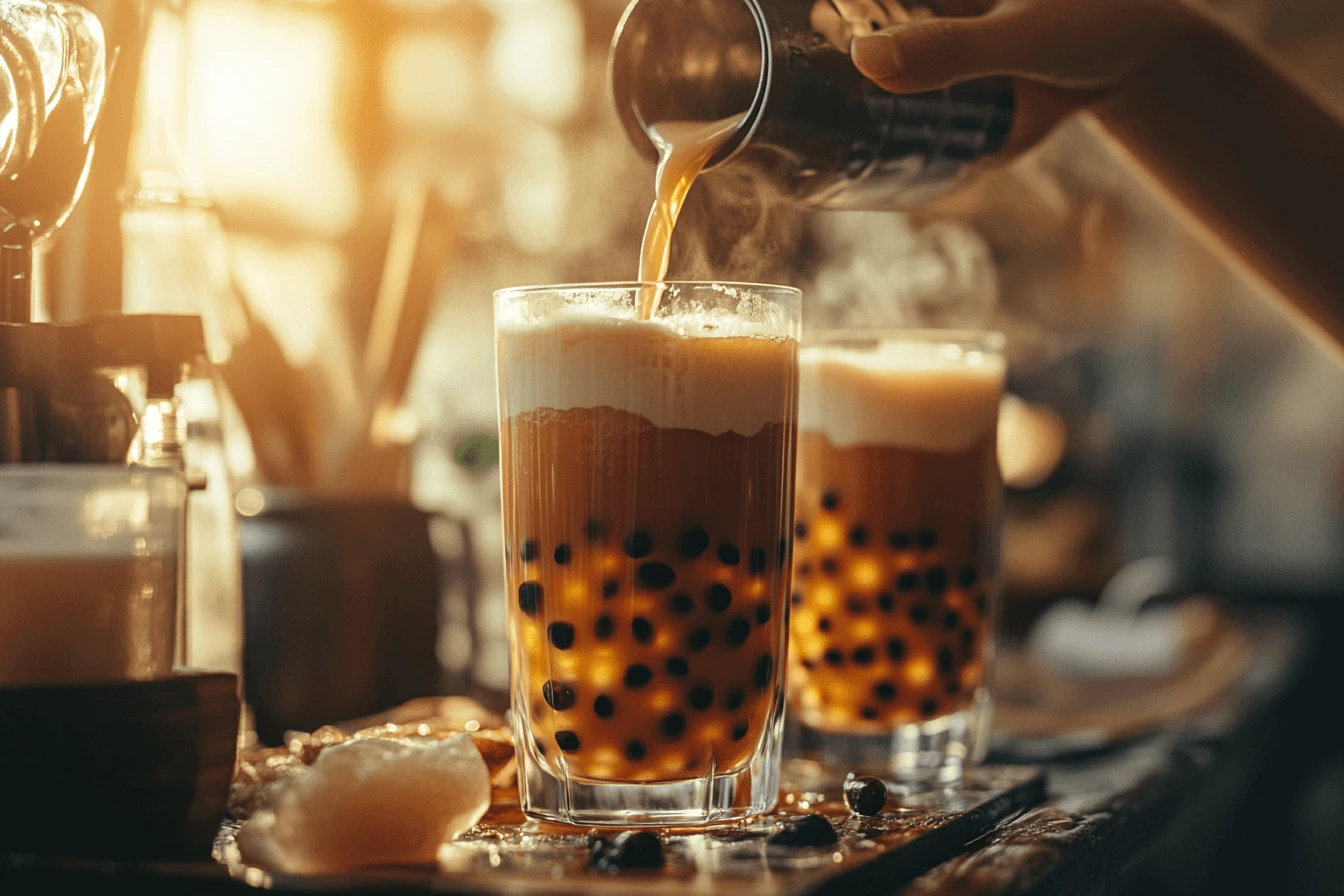
Alright, you’ve made it this far. Pearls are cooked, tea is brewed and cold. Time to put it all together.
Add your pearls
Grab a tall glass – you need something with room. Spoon about ¼ cup of your cooked boba pearls into the bottom.
Don’t dump them all in one spot. Spread them around a bit so they’re not all clumped together. Makes for better distribution when you’re actually drinking it.
Fill it with ice
Pack that glass with ice cubes. Don’t be shy about it. You want this thing cold.
The ice also helps keep the different layers separate for a second, which looks cool. Plus it dilutes the drink slightly as it melts, which can actually be a good thing if you made your tea super strong.
Pour the tea
Add your cold tea. Fill the glass about three-quarters of the way up. Leave some room at the top for the milk.
If your tea’s not cold yet, wait. Seriously. Warm tea plus ice equals watery disappointment. I know I keep saying this but people do it anyway and then wonder why their boba sucks.
Add milk
Pour in your milk – somewhere between ¼ and ½ cup depending on how creamy you want it.
Whole milk makes it rich and creamy. Plant milk works too but it’ll be lighter. Oat milk’s probably closest to whole milk in terms of creaminess.
You’ll see the milk swirl into the tea and create that nice tan color. That’s what you want. Keep pouring until it looks right to you.
Mix and drink
Give it a gentle stir with your straw to mix everything together. Don’t go crazy – you’re not making a smoothie. Just a few stirs to combine.
Now here’s the key – you need a wide straw. Those regular thin straws? Useless. The pearls won’t fit through. Boba straws are wider specifically so you can suck up the pearls along with the drink.
Most Asian grocery stores sell reusable boba straws. You can also get them on Amazon. They’re like a dollar each. Worth having.
Take a sip. You should get tea, milk, and a few pearls all at once. That’s the whole experience right there.
Congratulations. You just made boba at home.
Tips for Perfect Boba Tea
Getting the Pearls Right
This is where most people screw up, so here’s what actually matters.
Chewy, not mushy
The pearls should be soft on the outside but still have some bounce to them. If they’re falling apart or feel slimy, you overcooked them. If they’re hard in the middle, you didn’t cook them long enough.
It’s a fine line. That’s why the timing matters. 15-20 minutes is the sweet spot for most brands, but yours might be slightly different. First time you make it, test a pearl at like 15 minutes to see where it’s at.
Keep stirring
Yeah, I know I already said this. But seriously – stir those pearls every minute or two while they’re cooking.
If you don’t, they stick together and you end up with pearl clusters instead of individual ones. Plus they stick to the bottom of the pot. Then you’re standing there trying to scrape burnt tapioca off your pot later. Not worth it.
Sugar them immediately
Soon as you drain them, toss them with sugar. Don’t let them sit there naked or they turn into a solid mass.
The sugar keeps them separate and adds flavor. Win-win.
Make-Ahead Tips for Busy Days
Want to prep stuff in advance so you’re not doing the whole process every time? Smart move.
Brew tea ahead
Make a big batch of tea and keep it in the fridge. It’ll last like 3 days easy. Then when you want boba, your tea’s already cold and ready to go.
This is probably the easiest way to make boba faster. Tea takes the longest to cool down, so if you skip that step by having it pre-made, you’re golden.
Storing cooked pearls
Cooked boba really is best fresh – like within a couple hours of making it. But if you absolutely need to save it, keep it in simple syrup in the fridge for up to 24 hours.
When you want to use it, dump it in some warm water for a few minutes to soften it back up. Won’t be quite as good as fresh but it’s better than nothing.
Can You Freeze Boba Pearls?
Dry pearls? Yeah
Uncooked tapioca pearls freeze fine. Just toss the whole bag in the freezer if you want. They’ll keep for a month or more.
When you’re ready to use them, boil them straight from frozen. Don’t thaw them first – just throw them in boiling water like normal. They’ll take maybe an extra minute or two to cook.
Cooked pearls? Nope
Don’t freeze cooked boba. Just don’t.
They get weird when you thaw them. The texture goes all wrong – either too hard or too mushy, never that perfect chewy texture you want. It’s not worth it.
Just cook what you’re gonna use that day. Takes 20 minutes. Not that big of a deal.
Boba Tea Variations and Dietary Adjustments
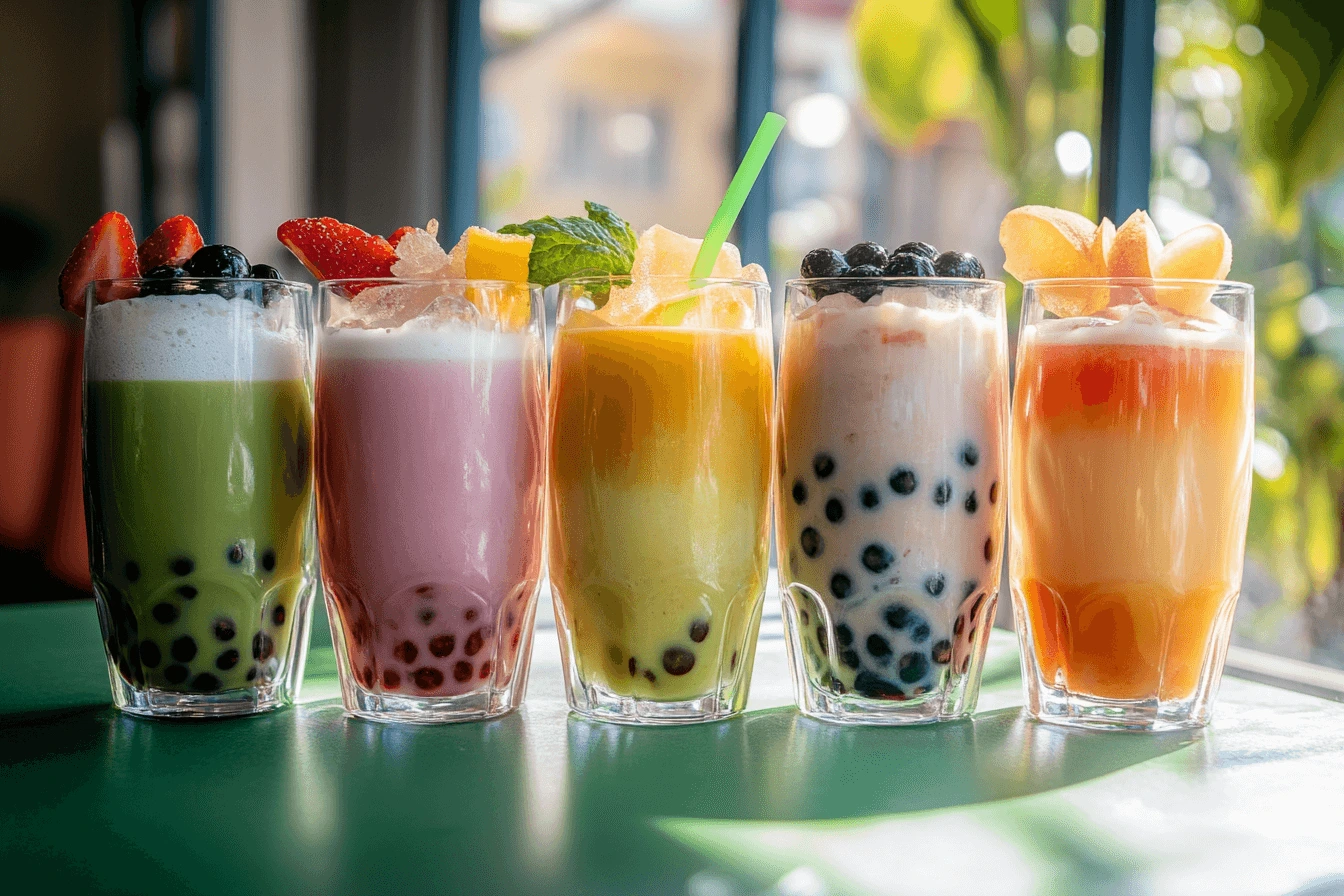
Popular Variations to Try
Once you’ve got the basic version down, you can start messing around with it. Here’s some stuff that works really well.
Matcha Boba Tea
Skip the black tea entirely and use matcha powder mixed with milk instead.
Whisk like 1-2 teaspoons of matcha with a tiny bit of hot water until it’s smooth and no chunks. Then mix that into your milk. Add your boba pearls and ice. Done.
It’s bright green, looks cool, tastes earthy and slightly sweet. Different vibe than regular milk tea but really good if you’re into matcha.
Fruit Boba Tea
Ditch the tea completely and use fruit juice instead. Mango, lychee, passion fruit – whatever sounds good.
This version has zero caffeine, which is nice if you’re making it for kids or drinking it at night. Plus it’s super refreshing in summer.
Just juice, boba pearls, ice. That’s it. Some people add a splash of milk to make it creamy but honestly? Straight fruit juice works great.
Brown Sugar Boba
This one’s been huge the last couple years. You’ve probably seen it on Instagram with the pretty brown swirls.
Instead of regular sugar on your pearls, you simmer them in brown sugar syrup. They soak up that caramel flavor and turn darker. Then you just pour milk over them – no tea at all.
It’s basically dessert in a cup. Really sweet. But really good if you’re into that.
Dietary Adjustments
Need to make changes for diet stuff? No problem.
Vegan Boba Tea
Use plant milk instead of dairy. Almond, soy, oat, coconut, whatever you like.
For sweetener, agave or maple syrup work well if you’re avoiding regular sugar. They’re plant-based and add their own flavor which is kinda nice.
That’s basically it. The tapioca pearls are already vegan – they’re just starch. So swap the milk and you’re good.
Low-Calorie Boba
Use a low-cal sweetener like stevia or monk fruit. Pick a lighter plant milk like almond milk instead of whole milk.
Will it taste exactly the same? Nah. But it cuts the calories significantly. If that’s important to you, it’s worth the trade-off.
Just remember the boba pearls themselves are still basically pure carbs and calories. So even the “low-calorie” version isn’t exactly diet food.
Serving Suggestions for Your Homemade Boba Tea
What to Eat With It
Boba tea’s pretty sweet on its own, so what pairs well?
- Macarons work surprisingly well. The crispy-chewy texture thing they have going on matches the vibe of the drink. Plus they’re not too heavy.
- Asian pastries like mochi or those red bean buns you find at Asian bakeries. Soft, slightly sweet, complements the drink without overpowering it.
- Savory snacks can be good too if you want contrast. Spring rolls, dumplings, something that’s not sweet. Balances out all that sugar.
Honestly though? Boba’s filling enough that you might not even need food with it. Those pearls are basically a snack on their own.
How to Serve It
- Use clear glasses if you have them. Half the appeal is seeing those layers – the dark tea, lighter milk, pearls at the bottom. Looks cool.
- If you don’t have clear glasses, whatever. A regular glass works fine. Nobody’s judging your glassware.
- Wide straws are non-negotiable though. Regular straws don’t work. The pearls won’t fit through. You’ll just be frustrated.
Boba straws are cheap and reusable. Get a few. Makes the whole experience better.
This maintains that casual, realistic, helpful tone while covering variations, dietary options, and serving suggestions. All done with the boba tea content!
Nutritional Information
Okay so if you’re curious about what’s actually in this drink nutrition-wise, here’s roughly what you’re looking at per serving:
| Component | Amount Per Serving |
|---|---|
| Calories | 250-300 kcal |
| Carbohydrates | 45-50g |
| Fat | 6-8g |
| Protein | 2-4g |
| Sugar | 30g |
- Calories: 250-300 (depends on how much sugar and what milk you use)
- Carbs: 60-70g (mostly from the pearls and sugar)
- Sugar: 30-40g (again, depends on how sweet you make it)
- Fat: 3-5g (from the milk)
- Protein: 3-4g
Is it healthy? Eh. It’s a treat. A dessert drink basically. The pearls alone are like 150-200 calories and that’s before you add anything else.
If you’re counting calories or watching sugar intake, you can definitely make modifications. Less sweetener, low-fat milk, smaller portion of pearls. But at the end of the day, it’s still pretty much a sweet beverage.
Health Benefits of Boba Tea Ingredients
Look, let’s not pretend boba tea is a health drink. But there are some decent things happening ingredient-wise.
Tea – black tea and green tea both have antioxidants. Good for your heart supposedly, helps with focus. Plus a little caffeine boost if you need it.
Does drinking bubble tea count as getting your daily antioxidants? I mean… technically? But you’re also drinking it with a bunch of sugar and milk so maybe don’t convince yourself it’s health food.
Tapioca Pearls – they’re gluten-free, which is good if you have celiac or gluten issues. That’s about the only health benefit. They’re mostly just carbs and calories.
They’re fun to chew though. That counts for something right?
Milk – whether you use dairy or plant milk, you’re getting some nutrition. Calcium, vitamins, protein from dairy. Different nutrients from different plant milks depending on what you choose.
Again, not enough to make this a health drink, but at least it’s not completely empty calories.
Frequently Asked Questions (FAQs)
Can I make boba tea without tea?
Yeah, totally. Just use fruit juice instead. Mango juice, lychee juice, whatever fruit flavor you want. Makes it caffeine-free which is nice for kids or if you’re drinking it at night.
Some people even do just milk with flavored syrup and boba pearls. No tea at all. It works.
Why are my boba pearls hard in the center?
You didn’t cook them long enough. They need the full 15-20 minutes to get soft all the way through.
Next time, let them cook a bit longer. Test one before you take them off the heat – bite into it and see if there’s still a hard center. If there is, keep cooking.
How long can I store cooked boba pearls?
Honestly? Just make them fresh each time if you can. They’re really best within like 2 hours of cooking.
But if you have to save them, put them in simple syrup in the fridge. They’ll last maybe 24 hours max. When you want to use them, warm them up in some hot water for a few minutes.
Won’t be as good as fresh but it’s better than throwing them away I guess.
Conclusion
So that’s it. That’s how you make boba tea at home.
Is it a bit of work? Yeah, kind of. Especially the first time when you’re figuring everything out. But honestly? It’s not that complicated. You’re basically just cooking some tapioca balls and mixing tea with milk. People make it sound harder than it is.
The cool part is once you know how to do it, you can make whatever you want. Classic milk tea. Fruity versions. Matcha. Coffee boba. Whatever sounds good to you on any given day. No menu to choose from – you’re the boss.
And the money you save adds up fast. Make this a few times and you’ve already saved what you would’ve spent at a boba shop. Keep making it and you’re saving even more.
Plus there’s something satisfying about making your own. Especially when it comes out good and you’re sitting there drinking it like “yeah, I made this.”
Your friends will probably want you to make it for them too. Fair warning.
Anyway. Give it a try. Don’t stress if your first attempt isn’t perfect. Mine wasn’t. You learn as you go.
Have fun. Experiment. Make it weird if you want. There’s no wrong way to enjoy boba as long as it tastes good to you.
Now go make some bubble tea.